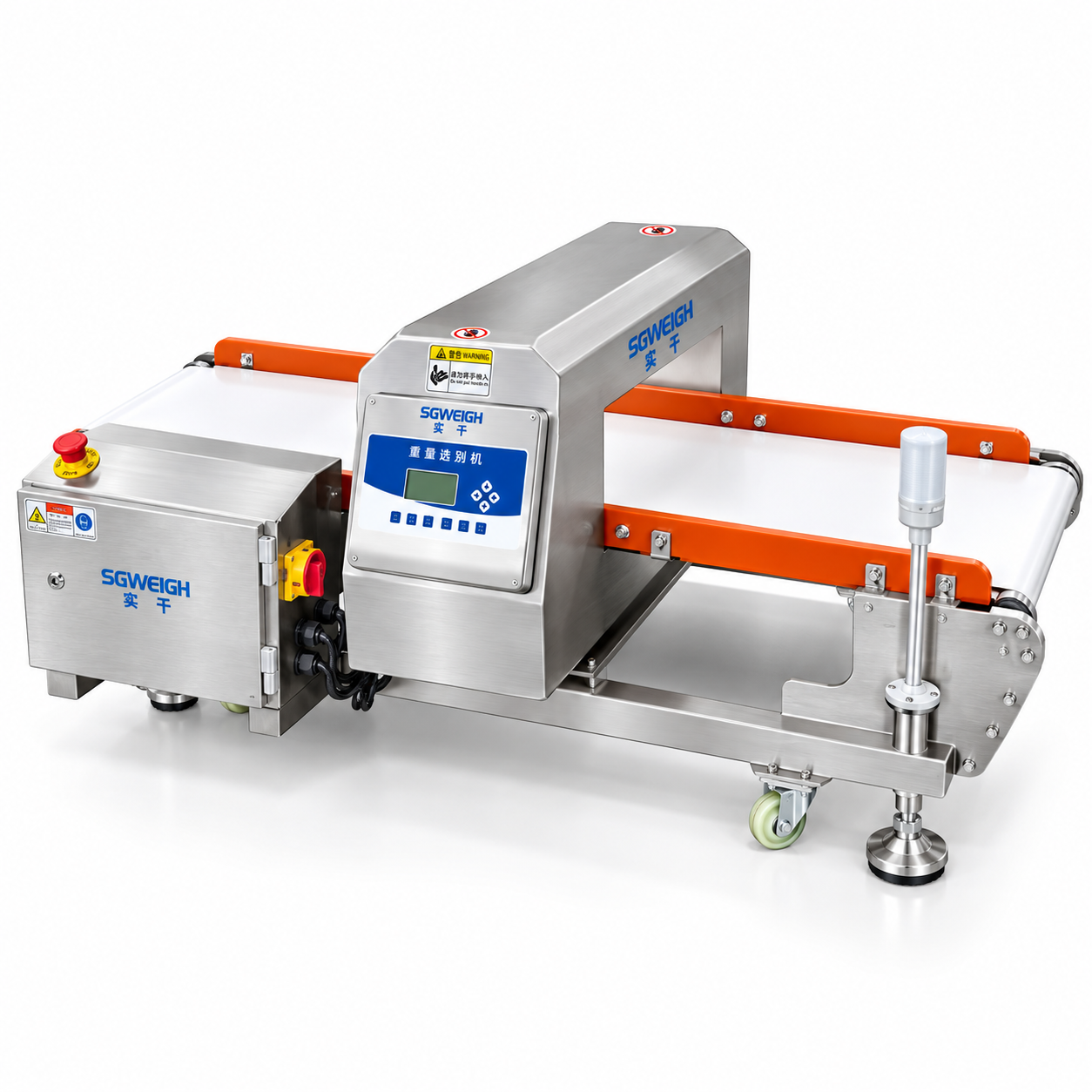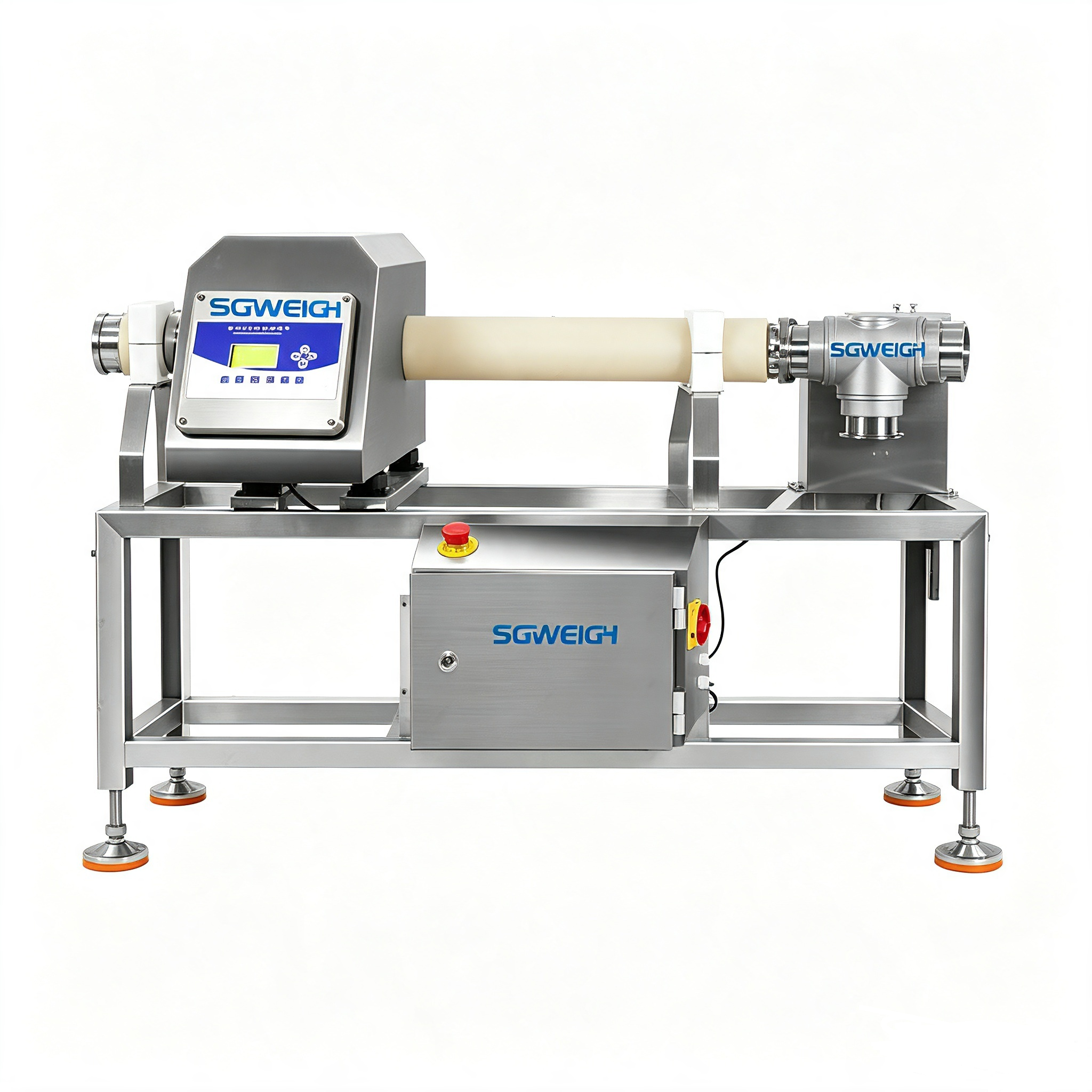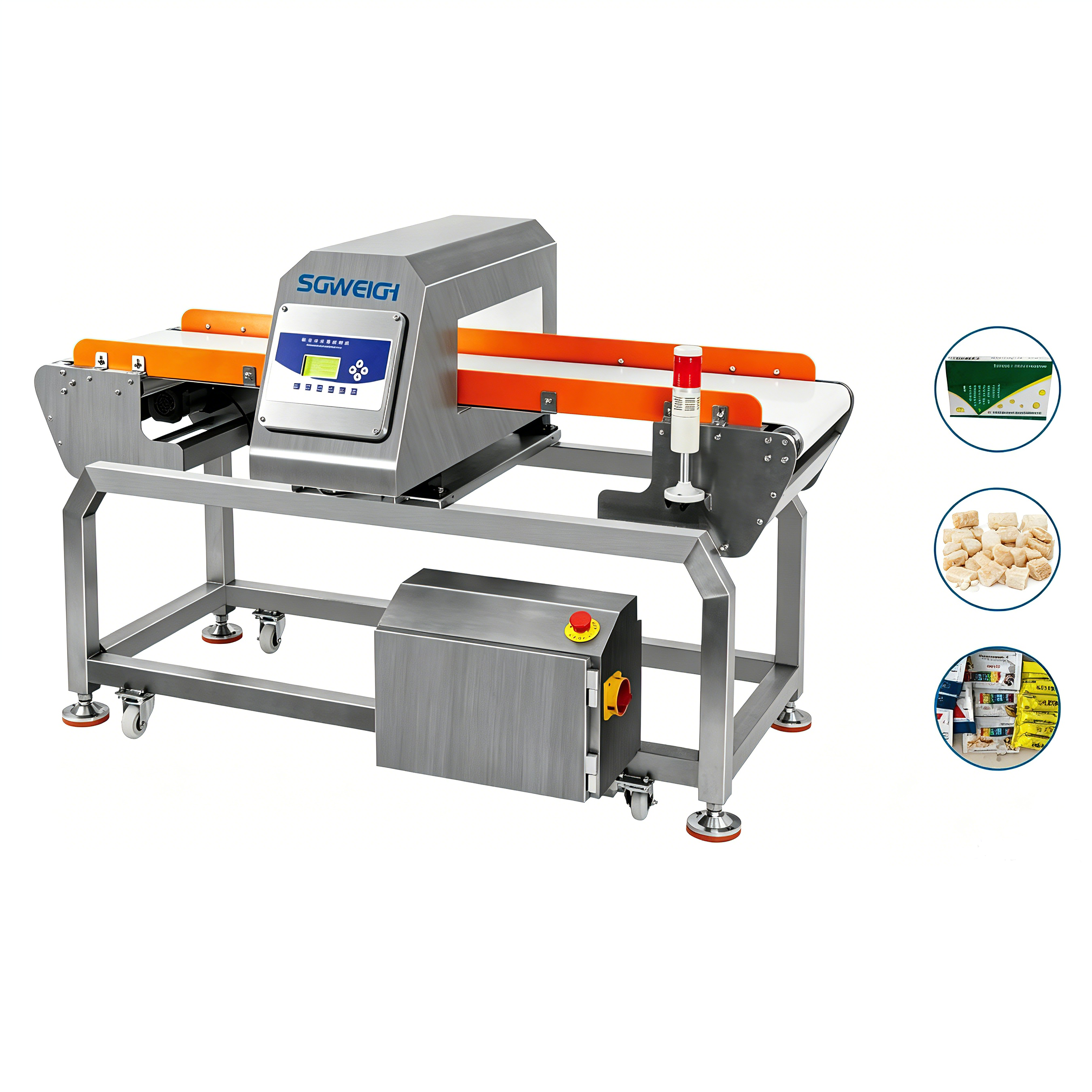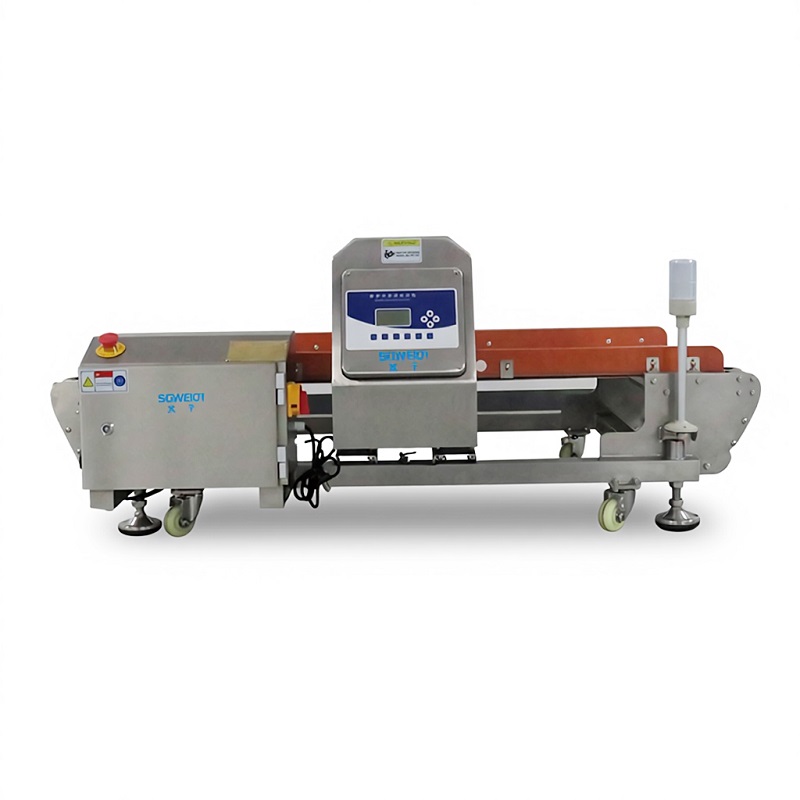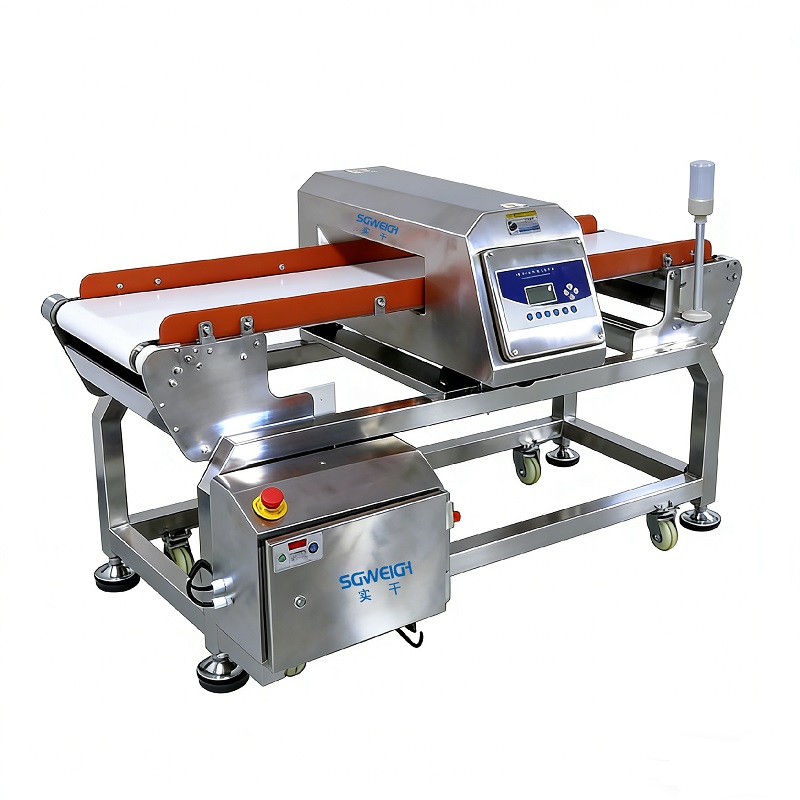
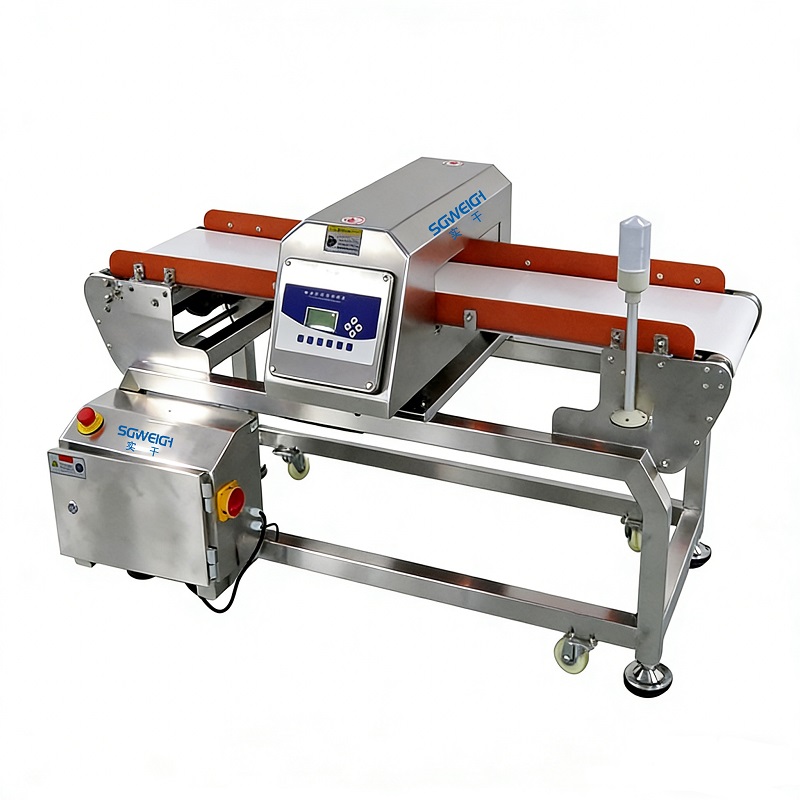
■ Product Overview
Food Metal Detector is a machine used in food production lines to detect and remove metal contaminants such as iron, stainless steel, and non-ferrous metals.When products are inspected in real time, the system will automatically trigger the rejection device to remove the defective products from the production line if products containing metal impurities are detected.
■ Tech Specifications
| Type | SG-M400 |
| Machine Grade | Food Grade |
| Detect method | Electromagnetic wave detection |
| Detecting width | 150-1000mm customized according to requirements |
| Detecting height | 80-500mm (or custom-made) |
| Detecting sensitivity | Fe 0.8mm, Non-Fe1.5mm, SUS 1.5mm |
| Detecting adjustment | Intelligent adjustable |
| Belt Speed | 25m /min (or specified) |
| Alarm mode | metal detection, alarm belt stop or automatic removal |
| Power | AC220V,50/60Hz (Or Customized) |

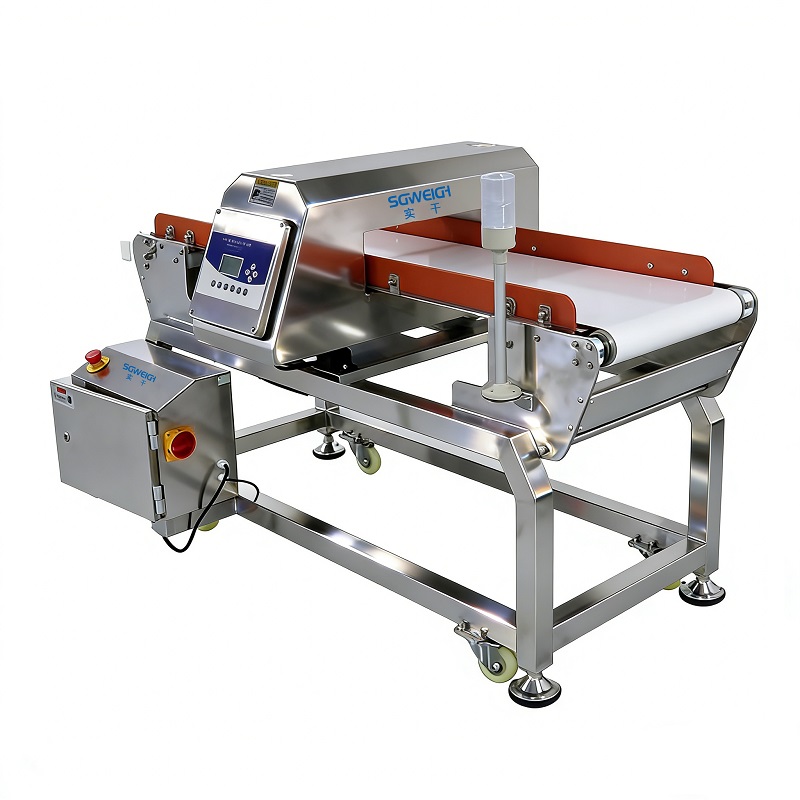
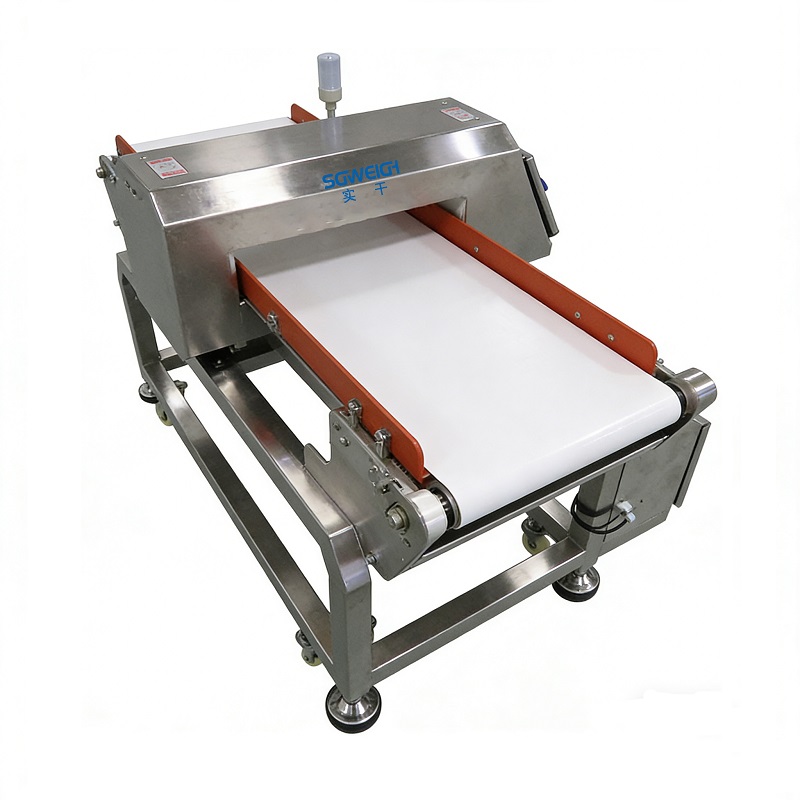
■ Main Features
1. Automatic Rejection System
The equipment automatically rejects defective products when metal contamination is detected.
2. Online Continuous Inspection
It can be installed on the production line for high-speed continuous inspection.
3. Automatic Product Effect Compensation
Reduces the impact of factors such as moisture and salt on inspection accuracy.
4. Touchscreen Intelligent Control
Equipped with a touchscreen interface for simple and intuitive operation.
5. Alarm Function
Provides audible and visual alarms when metal contamination is detected.
6. Inspection Data Recording
Records inspection data for convenient quality management and traceability.
7. Automatic Learning Function
The equipment can automatically learn product characteristics, improving inspection stability.
8. Multiple Rejection Methods
Supports multiple rejection methods such as air blowing, push rods, and flip-plates.
9. High-Speed Inspection Capability
Suitable for high-speed food production lines, improving production efficiency.
10. Production Line Integration Capability
Can be integrated with packaging machines, checkweighers, conveyor systems, and other equipment.


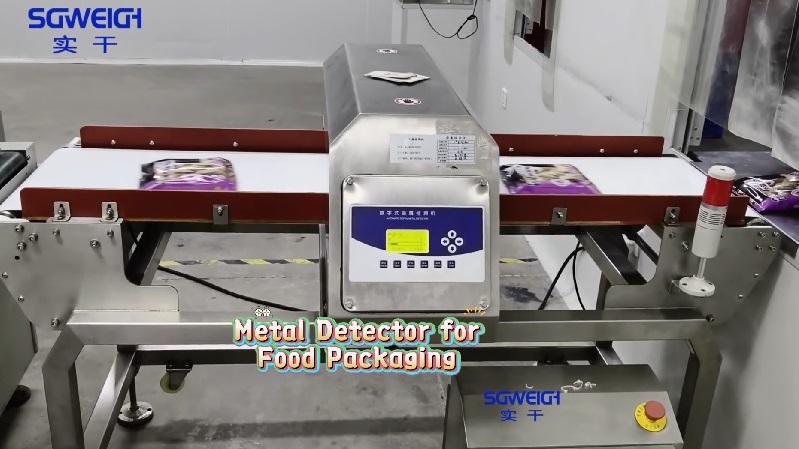
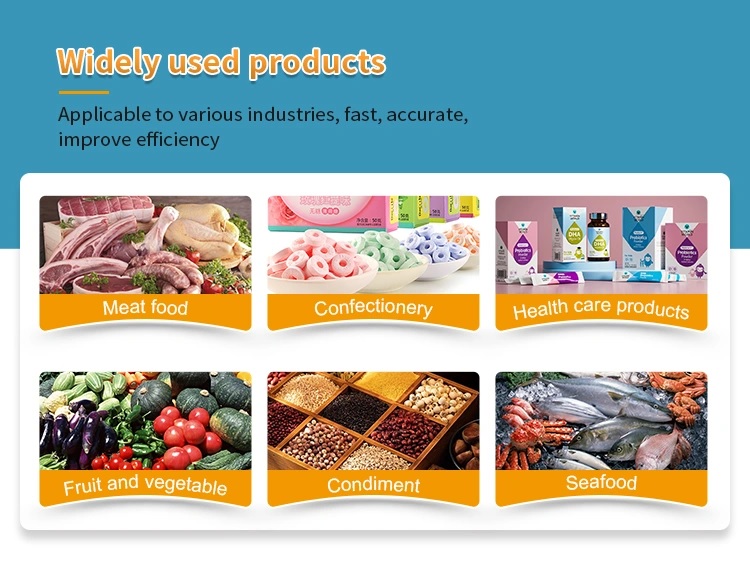
■ Application

■ Customers

■ Exhibitions


■ Packaging & Delivery
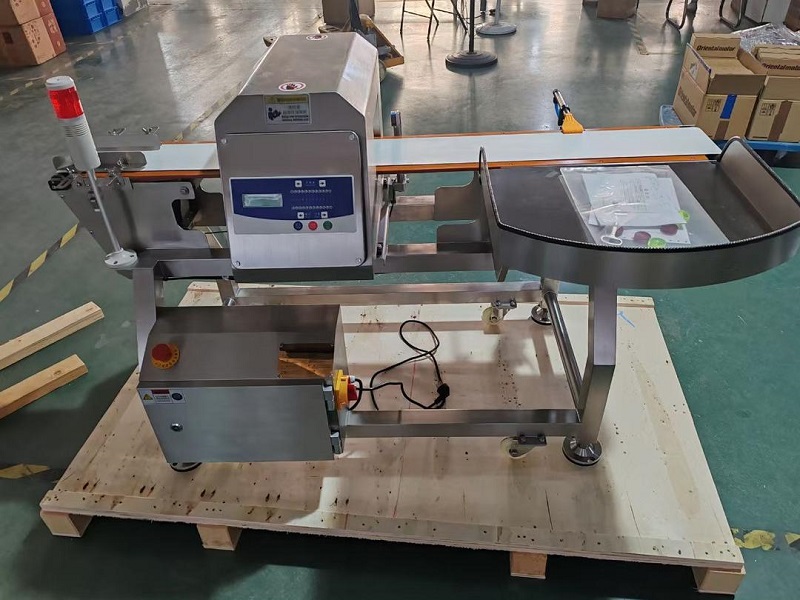
● Our machines undergo comprehensive testing and commissioning before shipment to ensure stable and reliable performance.
● Equipment is packaged in thickened wooden crates with shock and moisture-proof interiors to effectively prevent damage during transportation.
● We partner with several professional international logistics companies and support a variety of shipping methods, including sea, air, and land transport.
● Ensure the equipment arrives safely and on time at your facility.

■ FAQ
Q1. Why is metal detection important in food processing?
A: Metal detection helps ensure food safety, protect consumers, and comply with international food safety standards like HACCP and BRC.
Q2. What types of metals can a food metal detector detect?
A: Most food metal detectors can detect ferrous metals, non-ferrous metals, and stainless steel contaminants.
Q3. Where are food metal detectors used?
A: They are commonly installed in food processing lines for snacks, meat, seafood, bakery products, frozen foods, and packaged foods.
Q4. Can a metal detector work with packaged food?
A: Yes, food metal detectors can inspect both unpackaged and packaged products, including plastic, paper, and aluminum-free packaging.
Q5. How does a food metal detector remove contaminated products?
A: The system usually includes an automatic rejection device such as an air blast, pusher, or drop flap to remove contaminated items.
Q6. Are food metal detectors suitable for high-speed production lines?
A: Yes, modern food metal detectors are designed for high-speed conveyor systems and continuous inspection.
Q7. How sensitive is a food metal detector?
A: Detection sensitivity depends on the product type, size, packaging, and machine configuration.
Q8. Do food metal detectors require regular calibration?
A: Yes, regular testing with metal test pieces ensures the machine maintains accurate detection performance.
Q9. What industries use food metal detectors?
A: They are widely used in the food, pharmaceutical, and packaging industries to prevent metal contamination.

TAGS